
Detect Fraud and Cyber Threats
With Unmatched Accuracy
Test Drive IPQS Fraud Prevention and Cybersecurity Tools
Country
City
Region
VPN
TOR
Proxy
Fraud Score
Active VPN
Hostname
ISP
Organization
Timezone
Active Tor
Search Crawler
ASN
Zip Code
Recent Abuse
Bot Activity
Abuse Velocity
Connection Type
Coordinates
Trusted by thousands of companies


Intelligent Fraud Prevention
& Cybersecurity Risk Data
IPQS is dedicated to industry leading fraud detection techniques that help businesses enhance their security posture with accurate risk data, built to prevent false positives and minimize friction. Improve detection of fraudulent activity, enrich data for fraud investigations, and make smarter real-time decisions for effective fraud detection.
Using proprietary fraud detection data from our honeypot network, IPQS is always steps ahead of bad actors. Quickly identify suspicious activity across common types of fraud vectors such as bad bots, fraudulent transactions, account takeover fraud, proxies & VPNs, fake identities, and account opening abuse.
Proactively Prevent Attacks Across
the Customer Journey
-
Fraud PreventionFight fraud with real-time insight
-
CybersecurityDetect advanced cyber threats
-
IdentityVisibility into high risk users
-
Data ValidationCleanse invalid & risky data
Fraud Prevention
IPQS combats fraud and abuse at any user touchpoint. Enhance real-time protection with accurate fraud scoring and better detection of fraud for suspicious activity.

Supercharging Your
Fraud Decisions with IPQS Intelligence
Our clean, fresh, real-time risk data is foundational to all we do. IPQS has been refining proprietary datasets for over a decade. This focus gives us unparalleled insight into the daily shifts of risk signals, fraudulent activity, and overall industry fraud trends.
a network of over 10,000
honeypots and traps
100m+ daily transactions from
3,500+ businesses
botnets and newly updated
residential proxy IPs
passwords and personal information
from the dark web
emerging threats detected on
other sites and apps in your industry

10+ Years of Detecting Bots, Stopping Fraud, and Securing Enterprises
IPQS has been at the forefront of fighting online fraud for over a decade. Our advanced machine learning network performs deep reputation checks on user and transaction data to identify fraudulent activity, drawing on insights from hundreds of millions of daily financial transactions and user events worldwide.
Tailor fraud detection models to your exact use case with customizable rules, settings, and scoring that produce adaptable fraud indicators for any audience through more than 75 settings. Additionally, use exclusive data captured by our proprietary honeypot network to identify high risk user data, residential proxies, botnets, compromised credentials, and stolen user data associated with abusive behavior online.
Fraud Prevention Integrations & Plugins
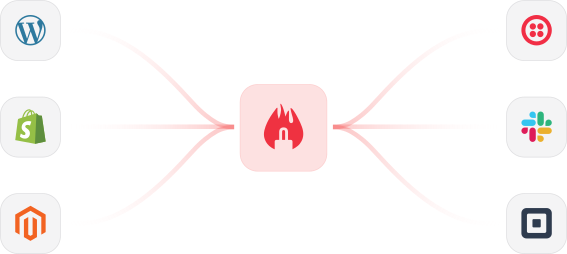
Add leading fraud prevention services to your favorite apps and third party platforms. Connect lead scoring, IP address intelligence, email validation, and phone verification to CRMs like Hubspot, Salesforce, and Outreach. IPQS also integrates with SIEM and SOAR platforms like Splunk, ThreatConnect, Rapid7, Palo Alto, & many more.
Improve fraud detection capabilities and better identify suspicious behavior with easy integrations and real-time API queries for better insight into unusual patterns and sophisticated fraud techniques. Most third party platforms integrate to IPQS within minutes.
How IPQS Detects What Others Miss
Modern fraud attacks rarely rely on a single tactic. Sophisticated attackers frequently combine anonymous infrastructure, automated tools, device spoofing, rotating IP addresses, and changing behavioral patterns to avoid traditional detection systems. IPQS analyzes multiple layers of intelligence together to help identify high-risk activity in real time.
Multiple Risk Signals Working Together
Rather than relying on isolated blacklists or a single indicator, IPQS evaluates a combination of network intelligence, device signals, behavioral analysis, reputation data, and historical activity patterns to provide more complete risk assessments.
Continuously Updated Threat Intelligence
Fraud infrastructure changes constantly as attackers rotate VPN servers, proxy networks, domains, and devices. IPQS continuously updates intelligence sources and detection models to identify newly observed threats and evolving attack patterns.
Advanced Proxy and VPN Detection
Anonymous connections often use hosting providers, residential proxy networks, or rapidly changing infrastructure to disguise activity. IPQS analyzes multiple network characteristics and intelligence signals to help identify potentially anonymous traffic.
Behavioral and Reputation Analysis
Modern fraud prevention extends beyond IP addresses alone. Reputation systems and behavioral analysis can help identify unusual activity patterns, suspicious automation behavior, and infrastructure previously associated with abuse.
Built for Real-World Fraud Prevention
IPQS technology is designed to help businesses evaluate risk during registrations, transactions, account activity, messaging workflows, and other environments where fraud prevention and trust are critical.
Because modern threats constantly evolve, effective fraud detection typically depends on continuously updated intelligence and multiple independent signals working together rather than a single detection method.
How Online Fraud Has Evolved Over the Last Decade
Online fraud has changed dramatically over the past ten years. Early fraud prevention systems often focused on simple indicators such as blacklisted IP addresses, disposable email domains, or obvious spam activity. Today, attackers use sophisticated tools and constantly changing infrastructure designed to appear legitimate while avoiding detection.
From Static Blacklists to Dynamic Risk Analysis
Traditional security systems frequently relied on fixed rules and static blacklists to identify threats. While these methods still provide value, modern fraud prevention increasingly depends on real-time intelligence and behavioral analysis that can adapt as new threats emerge.
The Rise of Anonymous Infrastructure
VPN services, residential proxy networks, cloud hosting providers, and anonymous browsing tools have become widely available. Fraudsters often use these technologies to hide their locations, rotate identities, and make abusive activity more difficult to trace.
Automation at Scale
Account creation abuse, credential stuffing, scraping, and promotional abuse are now commonly powered by automated tools and bots capable of generating large volumes of activity in a short period of time. These attacks often mimic legitimate user behavior to avoid detection.
Identity Signals Have Become More Complex
Modern attackers rarely rely on a single fake identity. Fraud attempts may involve combinations of temporary phone numbers, disposable email addresses, anonymous connections, spoofed devices, and synthetic account information designed to appear trustworthy.
Why Multiple Signals Matter More Than Ever
As fraud techniques have become more sophisticated, effective detection has shifted away from individual indicators and toward comprehensive risk analysis. Evaluating network intelligence, behavioral patterns, device characteristics, reputation data, and historical activity together provides a more complete understanding of potential risk.
Today's fraud landscape changes constantly as attackers adopt new technologies and evolve their tactics. Organizations that rely on continuously updated intelligence and layered risk analysis are often better equipped to identify emerging threats while minimizing disruption for legitimate users.
Why Detection Accuracy Depends on Multiple Independent Signals
Modern fraud prevention is rarely effective when it relies on a single indicator. Sophisticated attackers often use tools and techniques designed to bypass individual detection methods, making it important to evaluate multiple independent signals together when assessing risk.
Network Intelligence Provides Important Context
IP addresses, VPNs, proxy networks, hosting infrastructure, and connection reputation can help reveal whether activity originates from environments commonly associated with anonymity or abuse. However, network information alone rarely tells the full story.
Identity Signals Help Verify Legitimacy
Email addresses, phone numbers, domains, and account information can provide additional context about a user's identity. Validating these details helps strengthen risk analysis and reduce reliance on any single factor.
Behavioral Analysis Identifies Unusual Activity
Fraudulent activity often reveals itself through behavior patterns rather than static data alone. Login behavior, account creation activity, transaction patterns, and user interactions may provide valuable insight into potential risk.
Device Intelligence Adds Another Layer
Devices generate technical characteristics that can help identify returning visitors, automated tools, and suspicious activity. Device analysis helps connect activity that might otherwise appear unrelated when viewed through network data alone.
Reputation and Historical Data Improve Accuracy
Historical abuse reports, reputation intelligence, and previous observations can provide context that is not visible from a single event. Understanding past activity helps create a more complete picture of potential risk.
Each signal contributes a different piece of information, but no individual indicator is perfect. By combining independent signals from multiple sources, modern fraud prevention systems can make more accurate decisions while reducing false positives and improving trust for legitimate users.
How Threat Intelligence Becomes Actionable
Threat intelligence is most valuable when it helps organizations make better decisions in real time. Raw data alone rarely provides enough context to identify fraud, prevent abuse, or reduce risk. Modern security platforms transform large volumes of intelligence into practical insights that can support automated and human decision-making.
Collecting Intelligence From Multiple Sources
Threat intelligence begins with gathering information from a wide range of sources, including network activity, reputation systems, abuse reports, proxy infrastructure, behavioral patterns, and other security signals. Each source provides a different perspective on potential risk.
Analyzing Patterns and Relationships
Individual events may appear harmless when viewed in isolation. By analyzing relationships between infrastructure, identities, devices, and behavior patterns, threat intelligence systems can identify connections that may otherwise go unnoticed.
Evaluating Risk in Real Time
Modern platforms continuously analyze incoming activity against current intelligence and historical observations. This helps organizations evaluate risk as events occur rather than relying solely on retrospective investigations.
Prioritizing Meaningful Signals
Not every alert or indicator represents a significant threat. Effective threat intelligence systems help distinguish meaningful risk signals from normal activity, reducing noise and allowing teams to focus on higher-priority concerns.
Supporting Faster Decisions
Actionable intelligence helps organizations respond more quickly to emerging threats, suspicious activity, and potential fraud. Automated workflows, risk scoring, and real-time analysis can help reduce manual review efforts while improving consistency.
The goal of threat intelligence is not simply to collect more data, but to transform complex information into practical insights that help organizations identify risk, protect users, and make more informed decisions.
Recent News & Articles

 IPQS
IPQS
 IPQS
IPQS
 IPQS
IPQS
 IPQS
IPQS
 IPQS
IPQS
 IPQS
IPQS
Ready to eliminate fraud?
Start fighting fraud now with 1,000 Free Lookups!
We're happy to answer any questions or concerns.
Chat with our fraud detection experts any day of the week.
